Defensive decisions are the ones leaders make to protect themselves rather than the organisation. The safe hire over the better hire. The polished update over the honest one. The meeting where nobody disagrees because disagreement carries a cost.
What the research found
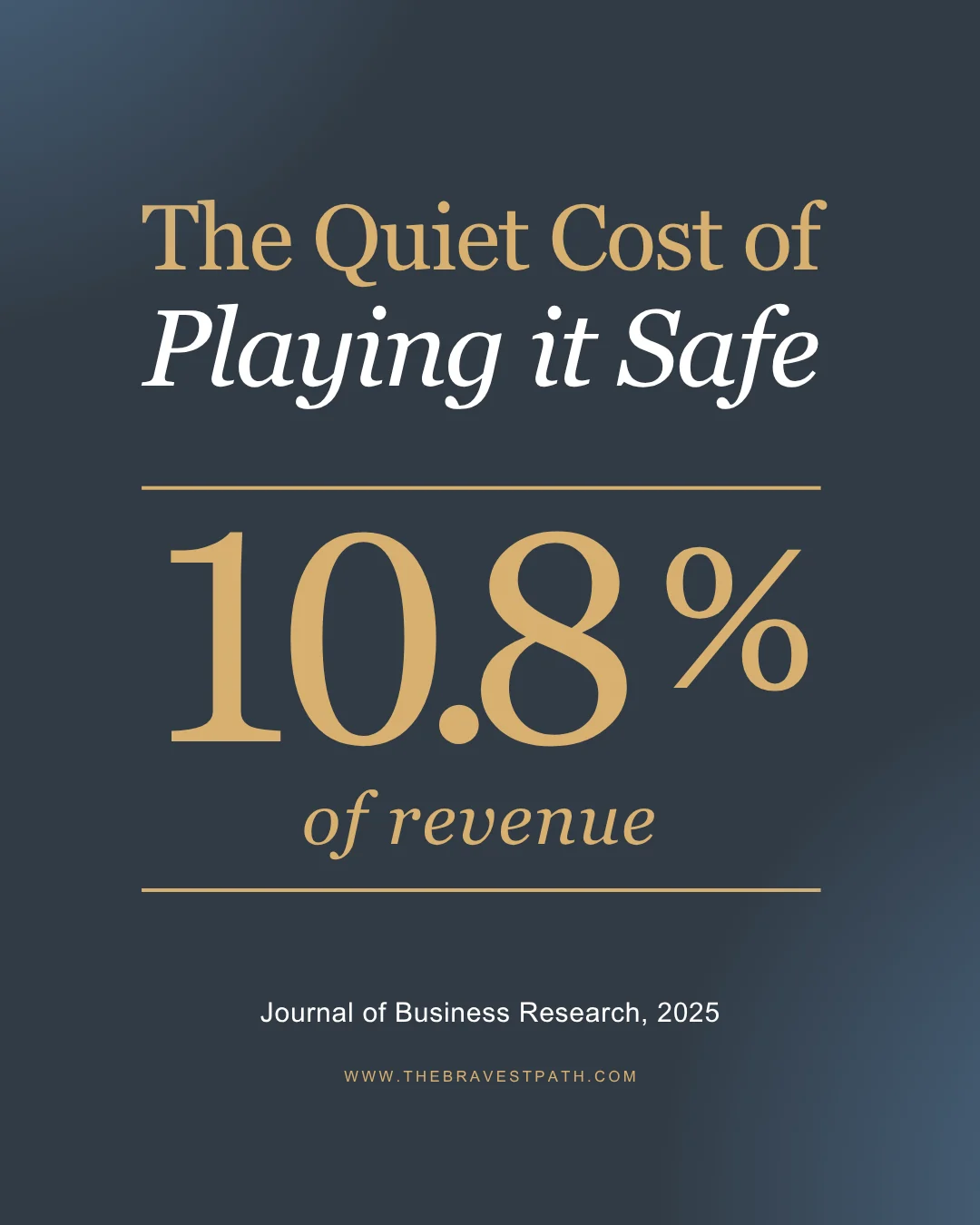
New research published in the Journal of Business Research put a number on what those decisions cost. In a study of 315 managers inside one large organisation, researchers found that defensive decision making equated to roughly 10.8% of annual revenue in forgone opportunities.
The figure comes from two measurements multiplied together. Managers reported that around 36% of their significant decisions were defensive, and estimated that each of those gave up about 30% of the value the better option would have delivered. The setting was a public body of 120,000 people across four levels of hierarchy, so revenue here stands for value forgone rather than money lost. That does not make it smaller. It makes it harder to see.
What actually drove it
The deciding factor wasn’t strategy or talent. It was the combination of low psychological safety and low authentic leadership. When leaders couldn’t be themselves and didn’t feel safe to take interpersonal risks, defensive choices became the default.
Authenticity alone helped. A leader who could be themselves partly offset a team low on psychological safety. But where psychological safety was already present, adding authenticity changed nothing the researchers could measure. Only psychological safety reduced the pattern at its root.
The cost nobody sees
This is the quiet cost most organisations never see on a balance sheet. It doesn’t show up as a loss. It shows up as the decisions that were never made, the conversations that were never had, the ideas that were politely shelved.
The smart risks leaders avoid are the ones that compound. Each defensive choice teaches the next one that safety lives in silence. It teaches the people watching, too. A team works out quickly which kind of decision gets a leader into trouble, and adjusts long before anyone says anything out loud.
One question to ask this week
Before your next significant decision, ask yourself one question: if I knew I wouldn’t be judged for this, would I make the same call? If the answer is no, you’ve found a defensive decision worth revisiting.
It is worth writing the answer down rather than turning it over in your head. Defensive decisions are easy to rationalise in the moment and obvious a week later.
Sources
Artinger, F. M., Marx-Fleck, S., Junker, N. M., Gigerenzer, G., Artinger, S. & van Dick, R. (2025). Coping with uncertainty: The interaction of psychological safety and authentic leadership in their effects on defensive decision making. Journal of Business Research, 190, 115240. sciencedirect.com
About Braver than Before®
Braver than Before® is a courage-building programme for leaders: six progressive workshops covering vulnerability, brave conversations, speaking up, self-compassion and resilience, equivalent to 30 hours of CPD. 91% of graduates are more likely to speak up after the programme, and 96% report increased confidence to act when something needs to change.