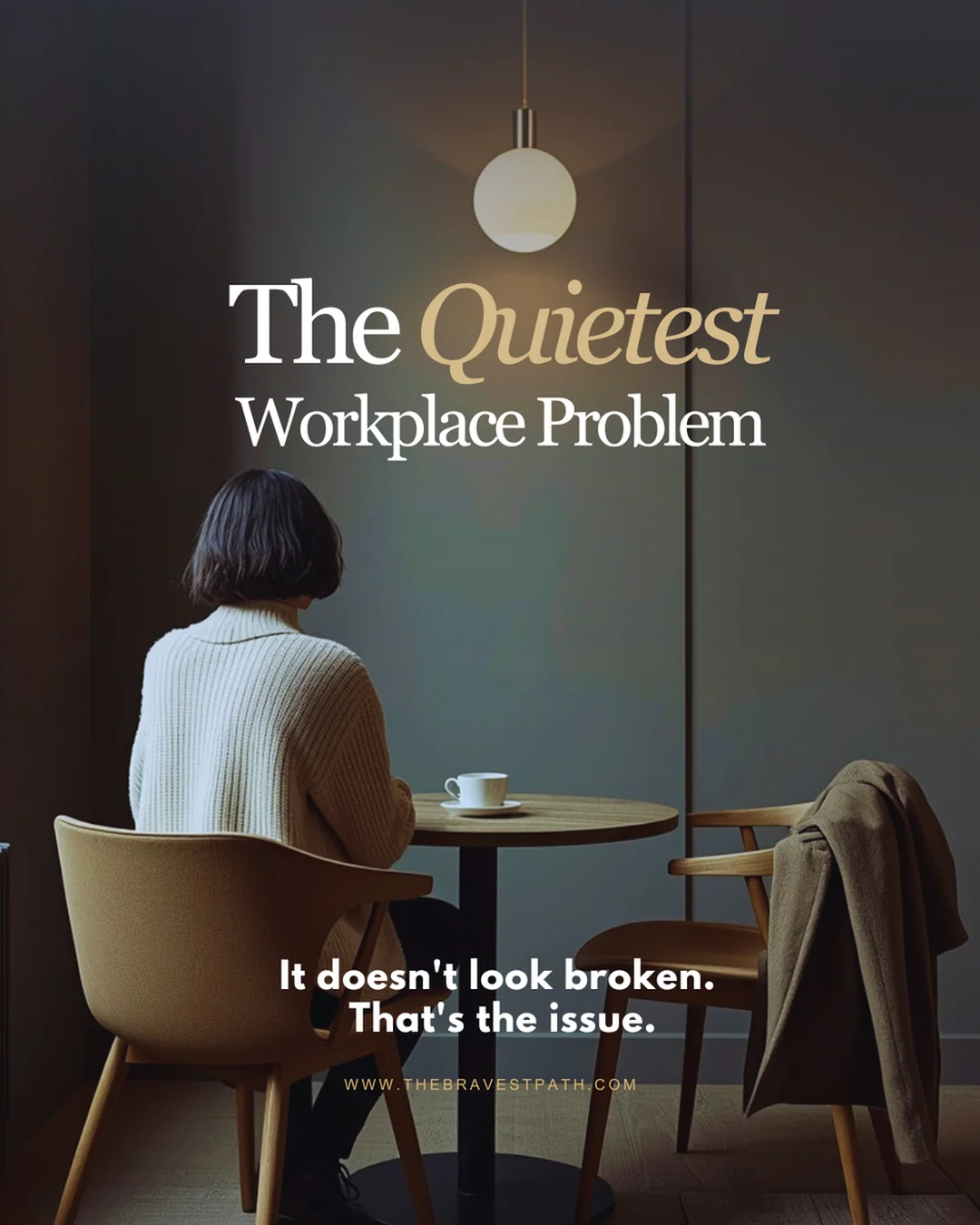
There’s a third workplace climate the research is starting to name. Not psychologically unsafe. Not psychologically safe. Just emotionally disengaged. It might be the most common of the three.
What it looks like
In an emotionally disengaged team, people don’t fear speaking up. They’ve concluded it isn’t worth the energy. The leader isn’t punitive. They’re just somewhere else. Polite, available for tasks, gone for everything else.
None of that shows up in an incident report or an engagement score. Meetings start on time. Work gets delivered. What has gone is the expectation that saying something will change anything, and once that goes, people stop testing it.
What the research found
New qualitative research from Slovakia, published in Nature’s Scientific Reports in February, identified this as a distinct climate alongside the safe and unsafe categories most of us already know. Konečná, Lisá and Čiriková interviewed employees and built a typology of workplace climates: psychologically safe, psychologically unsafe, and emotionally disengaged.
The third produced the same silence as the fear-based cultures. Harder to spot, because nothing looks broken on the surface. A team that has stopped speaking because it is frightened and a team that has stopped speaking because it has given up look identical from the outside. They need very different things from a leader.
The leader behaviours the researchers tracked were emotional availability, relational consistency, and accessibility. Quiet things. Easy to deprioritise when the diary is full.
None of the three is a skill you learn once and then have. They are things you keep doing or quietly stop doing, usually without deciding to. Consistency is the word carrying the weight there: warmth once a quarter reads as an event rather than a relationship.
Why Connect comes first
The Courage to Connect is the first workshop in Braver than Before® for a reason. Thinking differently, speaking up, caring, keeping going, rising. None of it lands in a team where people have stopped expecting their leader to actually be there. The absence isn’t dramatic. It’s quiet. Which is why it gets missed.
A small audit, if it’s useful
Look at your last week of one-to-ones. How many were tasks and updates only? How many included a single moment where you asked something personal and waited for a real answer? If the ratio is off, that’s where to start.
The waiting is the part people skip. Asking the question and then filling the pause yourself reads as politeness rather than interest, and people can tell the difference.
Sources
Konečná, L., Lisá, E. & Čiriková, V. (2026). The role of leadership in shaping psychological safety: a qualitative study from Slovakia. Scientific Reports, 16, 7249. nature.com
About Braver than Before®
Braver than Before® is a courage-building programme for leaders: six progressive workshops covering vulnerability, brave conversations, speaking up, self-compassion and resilience, equivalent to 30 hours of CPD. 91% of graduates are more likely to speak up after the programme, and 96% report increased confidence to act when something needs to change.